

You don't have a productivity problem. You have a worth wound.
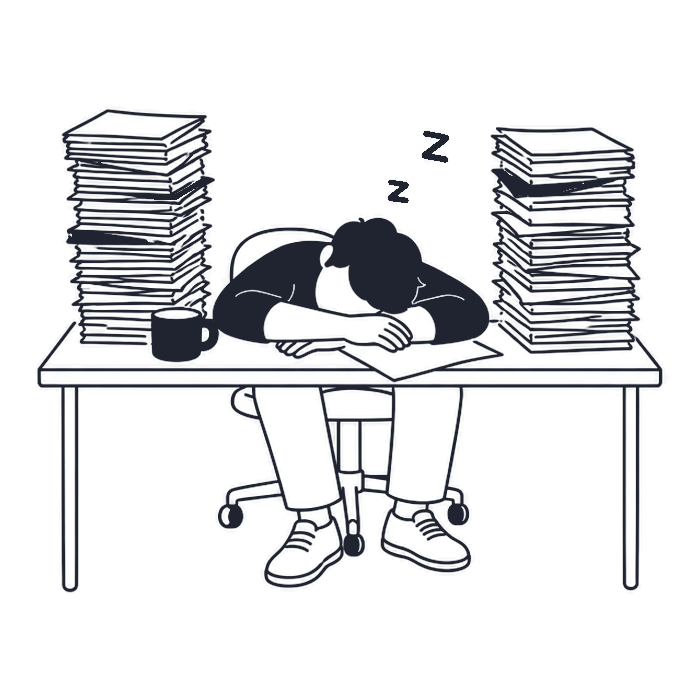
Everyone is tired all the time, and somewhere we decided that was normal. It isn't. Burnout is not a personality trait or a busy season. It is a signal, and it is worth listening to.
Burnout is not laziness or a busy season; it is a signal from a nervous system running on empty. In India, where worth often gets fused to output, rest can feel like failing. Fenweh helps with burnout, the worth wound, toxic workplaces, and the anxiety of layoffs and AI, in plain language, without pathologising your ambition.
The cruel trick of burnout is that it disguises itself as a character flaw. You do not think "I am depleted." You think "I have become lazy, unmotivated, a bit useless," and then you punish yourself for it, which costs more fuel you do not have.
In a lot of Indian households, being useful was how you earned love and safety. So when the tank runs dry, stopping does not feel restful. It feels dangerous. That is the worth wound, and it is treatable.
"I'm fine" is the most overworked phrase in Indian English.
Context worth holding: India has roughly 0.3 psychiatrists per 100,000 people against a WHO-recommended 3, and a mental-health treatment gap estimated as high as 70 to 90 percent (WHO and NIMHANS estimates). Most people carrying burnout never get to name it, let alone treat it.
What it actually sounds like from the inside.
"I am so lazy, I cannot get anything done."
Exhaustion, not laziness. Burnout and low mood flatten drive before anything else.
"If I am not productive, I feel worthless."
Self-worth fused to output. The achievement script running without an off switch.
"My manager is fine, I am just too sensitive."
Sometimes. And sometimes it is workplace harm you have been taught to absorb.
"What if AI takes my job?"
Survival anxiety and identity-through-work collapse. Real fear, worth saying out loud.
Five ways it shows up before you call it burnout.

Overwhelm
Buried by what has piled up

Frustration
The day that will not cooperate

Disappearing
When the work hides the person
Depletion
Running past the point of rest

Recovery
Putting it down, on purpose
How therapy helps with burnout
- Separate worth from output. The slow, freeing work of no longer earning your right to rest.
- Read the signal accurately. Is this burnout, low mood, a toxic environment, or all three? Clarity changes what you do next.
- Protect your health inside the job. Practical, sustainable boundaries that fit your actual life, not a Western template.
- Make grounded decisions. Whether to stay, change, or leave, from steadiness rather than panic.
| Burnout | Depression | |
|---|---|---|
| Usually tied to | A context, often work | Follows you everywhere |
| Rest helps | Somewhat, if the load lifts | Often not, on its own |
| Core feeling | Depleted, cynical, detached | Flat, hopeless, heavy |
| What helps | Load change plus support | Structured therapy, sometimes more |
A guide, not a diagnosis. The two often overlap. A conversation sorts it out better than a table can.
Before you begin.
Being tired all the time is not the price of being alive.
When you are ready to stop managing the depletion alone, we are here. No urgency, no shame, no fixing. Just a real conversation, at your pace.